30th Sunday in Ordinary Time, Year A
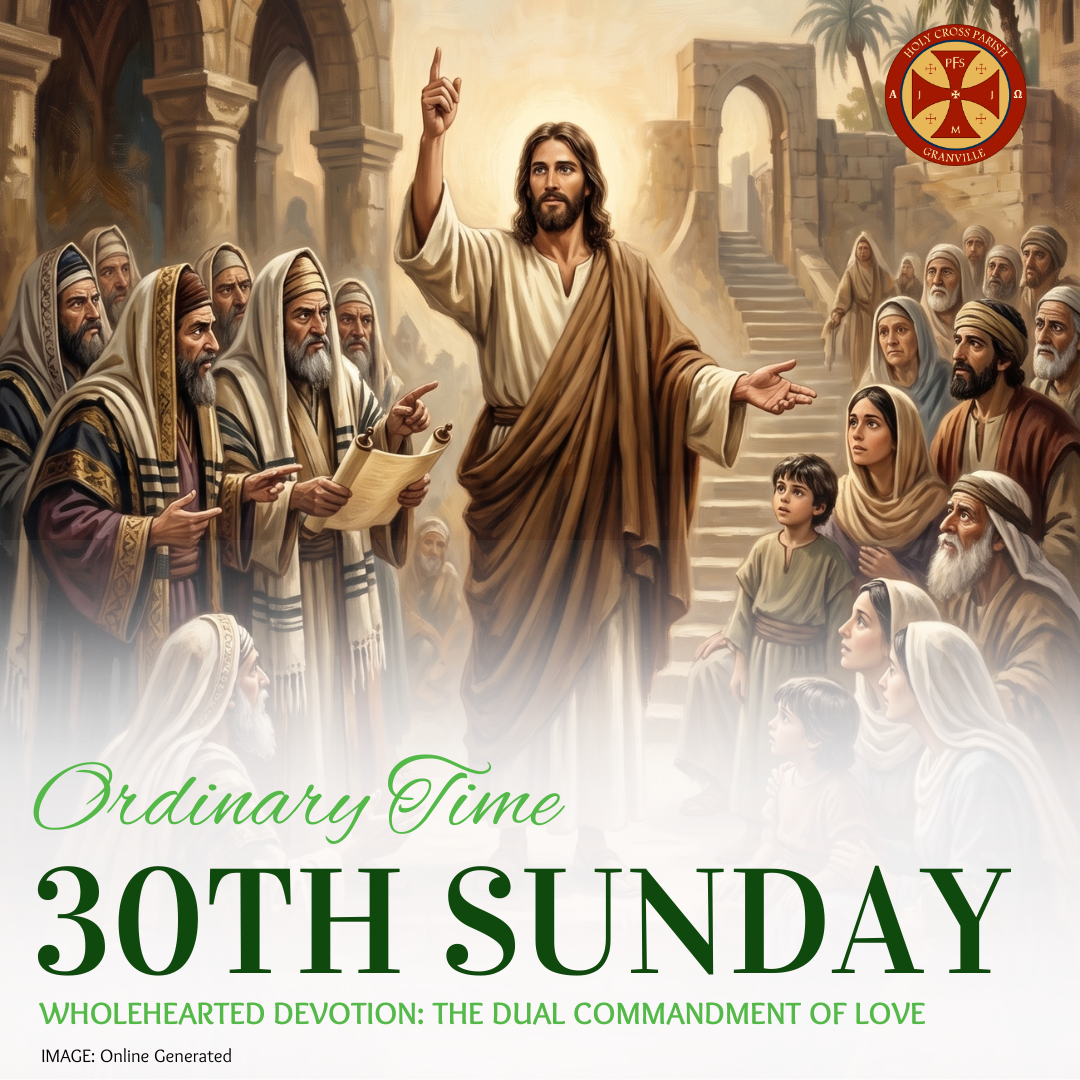
In this week’s Gospel reading, the Pharisees gather to test Jesus as they attempt to trap Him within the complexities of Jewish law. Asking Him to identify the greatest commandment out of hundreds of distinct precepts, they seek to ignite a theological dispute. Instead, Christ cuts through the noise with divine authority, revealing the absolute core of the Christian life.
He quotes the ancient Jewish daily prayer, the Shema, commanding us to love the Lord our God with all our heart, soul, and mind, and immediately unites it with the command to love our neighbour as ourselves. By declaring that the entire law and the prophets depend on these two pillars, Jesus forever binds the worship of God to the service of humanity.
This text establishes the unshakeable foundation of Catholic moral teaching: true theological charity is a supernatural virtue, not mere human philanthropy. We cannot claim to love the invisible God if we harbour malice or indifference toward the neighbour created in His image. Equally, any attempt to love our neighbour is ultimately incomplete if it is divorced from God’s truth and does not seek their highest good, which is eternal salvation.
Modern culture often attempts to reduce Christianity to a system of social work, neglecting the primary duty of divine adoration. This Gospel firmly corrects that imbalance. Our horizontal obligations to our neighbours must always be fueled by a prior, vertical relationship with our Creator. By prioritising the worship of God, particularly through the Holy Sacrifice of the Mass, our capacity to genuinely love those around us—especially those who are most difficult to love—is transformed, purified, and sustained by Christ’s own grace.